
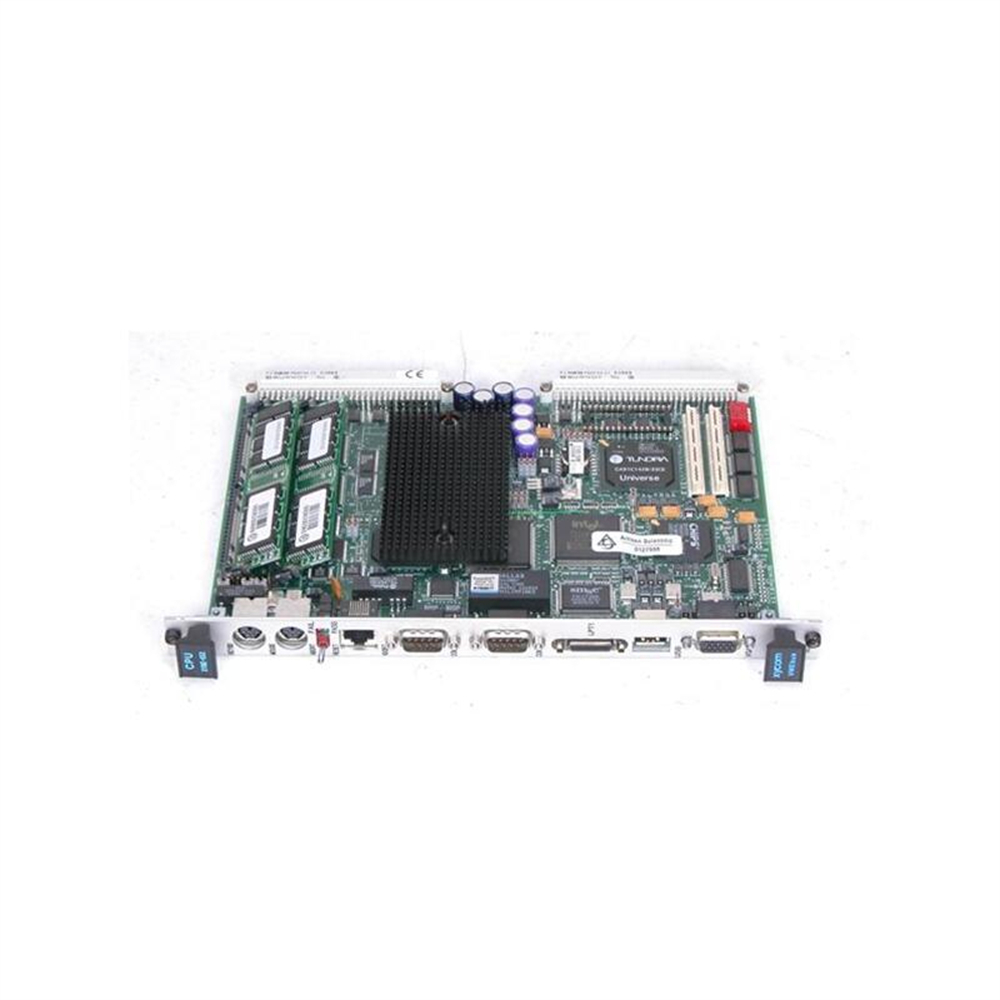
XYCOM XVME-203
XYCOM XVME-203 Overview
Product Positioning:
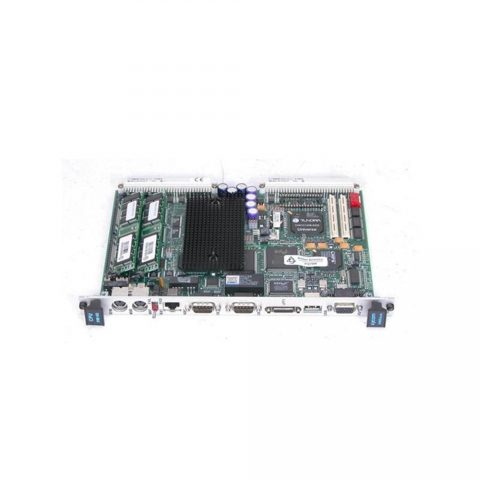
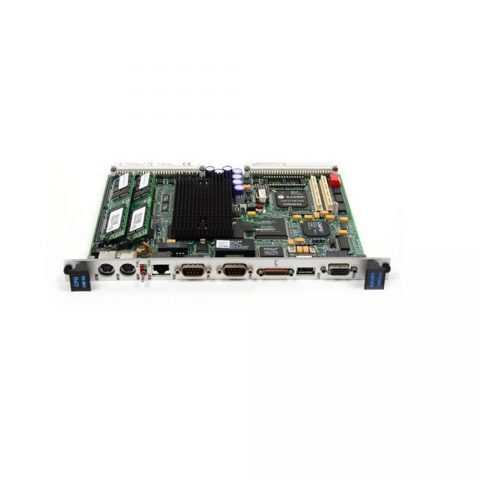
The XVME-203 is a VME-bus counter/I/O module developed by XYCOM (Xiamen Xycom Automation). It is a 3U single-board industrial control card that provides counting functions (ten 16-bit counting channels) and digital outputs (eight channels). The board features a built-in quadrature decoding circuit, enabling direct use in high-speed pulse counting, position encoding, and rotational speed measurement applications.
Core Technical Specifications
- Counting Channels: 10 independent 16-bit counters supporting quadrature encoder inputs
- Output Channels: 8 digital outputs
- Power Supply: 24 V DC (typical industrial power supply specification)
- Operating Temperature: –40 °C to +70 °C, designed for harsh industrial environments
- Interface: Standard VME64x bus, fully compatible with the VME-bus specification; certain models also include Ethernet and RS-232/RS-485 interfaces for easy integration with host PCs or PLCs
- Memory: 512 KB RAM + 2 MB Flash for program and parameter storage
Main Functions
- High-Speed Counting: Performs counting at millisecond- or microsecond-level speed, suitable for high-speed sensors and encoders
- Quadrature Decoding: Built-in quadrature detection circuit outputs decoded counts directly without external circuitry
- Digital Output: 8 programmable digital output channels for controlling relays, indicators, and other actuators
- Multi-Bus Compatibility: Supports VME64x, Ethernet, and serial communication for seamless connection with upper-level systems such as PCs, PLCs, and SCADA platforms
Typical Applications
- Manufacturing: Speed monitoring, pulse counting in packaging machines, production line counters
- Automation Control: Robot joint position counting, CNC axis motion counting
- Process Control: Pulse counting for flowmeters and metering pumps
- Laboratory & Research: High-speed data acquisition, experimental device synchronization
Advantages
- Modular Design: Compact 3U single-board form factor for direct installation in standard VME chassis, simplifying expansion and maintenance
- High Reliability: Industrial-grade protection and wide-temperature operation ensure continuous, long-term stability
- Software Support: Supplied with MS-DOS/Windows driver libraries and example programs to streamline secondary development
Summary
The XYCOM XVME-203 is a VME-bus module purpose-built for industrial counting applications, featuring ten 16-bit counters, quadrature decoding, and eight digital outputs. Designed for wide-temperature operation and VME system compatibility, it integrates seamlessly into control, measurement, and data acquisition systems across manufacturing, automation, and research fields.
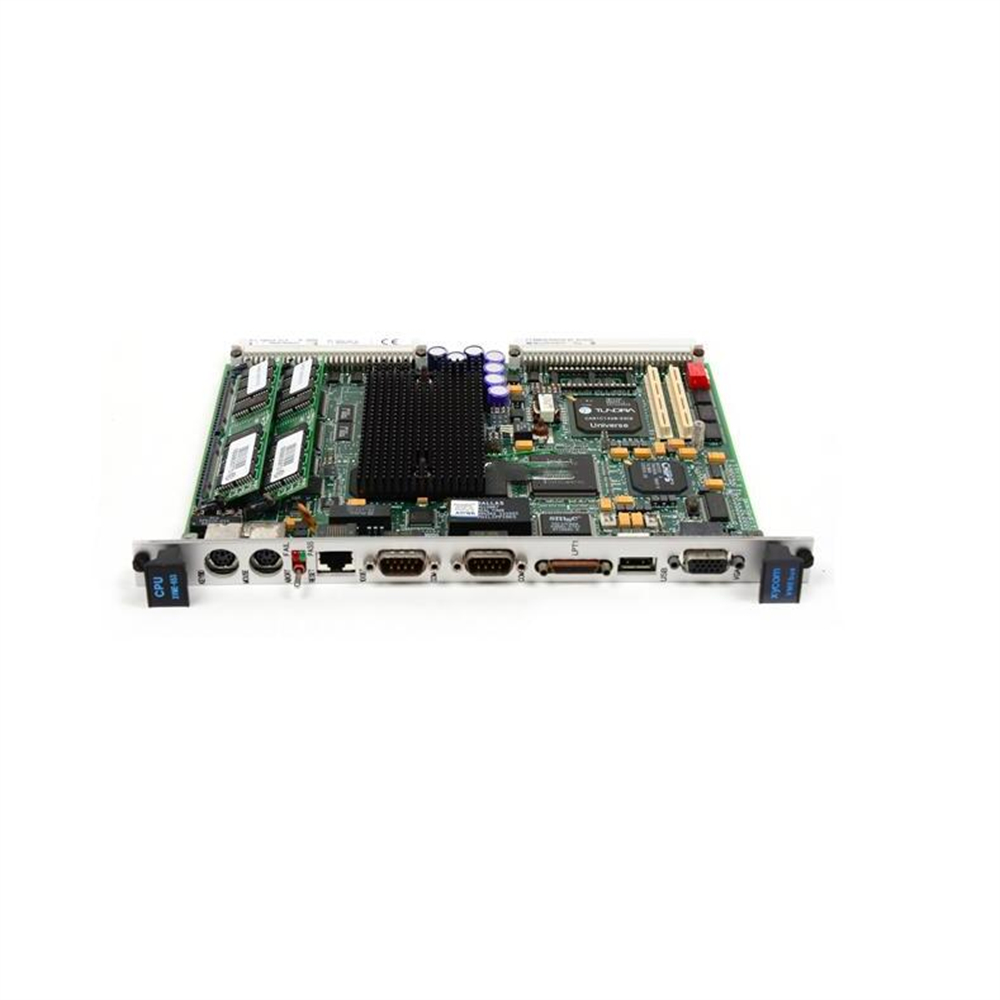
ABB Allen-Bradley Alstom Bently Emerson Foxboro
GE MOOG Schneider Woodward HIMA Honeywell
ABB 5SHY series hot selling//large inventory//brand new//affordable price
First hand source, affordable price. Spot inventory!
•Shipping Port: Xiamen
•E-mail: sales7@saulplc.com
•Tel: + 86-15359273796(WhatsApp)
•Ship to you via Fedex/DHL/TNT/UPS/EMS
•Package: Original packing with cartons

More brands//More models//Hot selling inventory//Welcome to inquire
| ABB | GE Fanuc | Triconex | Bently |
| 3BHB004661R0101 | IC693CHS397 | DS200SLCCG1AEE | 8851-LC-MT |
| 3BHB000652R0101 | IC693MDL753 | DS200SLCCG1ACC | 8851-LC-MT |
| 3BHB000272R0101 | IC693ALG442 | DS200SIOCG1A | 8811-IO-DC-01 |
| 3BHE006805R0001 | IC693BEM321 | DS200SIOBH1ABA | 8810-HI-TX-01 |
| 3BHE004468R0021 | IC693MDL752 | DS200SHVMG1AFE | 8750-CA-NS |
| 3BHE010751R0101 | IC693MDL646 | DS200SHVMG1AED | 8709-CA-08 |
| 3BHE009017R0101 | IC693MDL741C | DS200SHVMG1ACC | 8611-FT-FU |
| HIEE300936R0101 | IC693ACC310 | DS200SHVIG1BGD | 8607ERL |
What Is a Distributed Control System (DCS)? A Complete Guide
A Distributed Control System (DCS) is a sophisticated automated control system that uses a network of interconnected controllers, sensors, and computers to manage complex industrial processes.
How Does a Distributed Control System Work?
A DCS integrates several key components that work in unison to monitor and control industrial operations in real time. Here’s a breakdown of its core elements:
1️⃣ Controllers (The “Brain”)
Controllers process input data from sensors using predefined logic and algorithms. They send output commands to actuators to maintain process variables within desired limits, ensuring stable and efficient operation.
2️⃣ Sensors (The “Eyes and Ears”)
Sensors measure vital process parameters—including temperature, pressure, flow rate, and level—and provide continuous real-time data to the controllers.
3️⃣ Actuators (The “Muscles”)
Actuators carry out physical adjustments based on commands from the controllers. Common actions include opening or closing valves, starting or stopping motors, and regulating equipment.
4️⃣ Operator Stations (HMI – Human-Machine Interface)
These stations provide a graphical user interface (GUI) that allows operators to visualize the entire process, adjust setpoints, respond to alarms, and optimize performance.
5️⃣ Communication Network (The “Nervous System”)
A high-speed data network connects all components of the DCS, enabling seamless communication and coordination across different areas of a facility, even over large distances.
Key Advantages of Using a Distributed Control System
- Decentralized Architecture: By distributing control tasks, a DCS minimizes the impact of a single point of failure, increasing system resilience.
- Scalability and Flexibility: It allows easy expansion or modification of control loops and processes without disrupting existing operations.
- High Availability and Redundancy: Built-in redundancy in controllers, networks, and power supplies ensures uninterrupted operation, essential for critical processes.
- Enhanced Process Efficiency: Optimizes control loops, reduces energy consumption, improves product quality, and decreases operational waste.
- Integrated Data Management: Provides real-time analytics, historical trending, and reporting capabilities for better decision-making.
DCS vs. PLC vs. SCADA: What’s the Difference?
While DCS, PLC (Programmable Logic Controller), and SCADA (Supervisory Control and Data Acquisition) systems are all used in industrial automation, they serve different purposes:
- A DCS is ideal for complex processes requiring high reliability and coordinated control over a large area.
- A PLC is typically used for discrete control tasks such as assembly lines or machinery.
- SCADA focuses on supervisory-level monitoring and data gathering across geographically dispersed assets.
In many modern installations, DCS and SCADA functionalities are integrated to leverage the strengths of both systems.
Applications of Distributed Control Systems
DCS technology is widely applied in industries such as:
- Oil & Gas Refining
- Power Generation
- Chemical and Pharmaceutical Manufacturing
- Water and Wastewater Treatment
- Food and Beverage Processing
Conclusion
A Distributed Control System (DCS) offers a robust, scalable, and efficient solution for managing complex industrial processes. Its distributed nature not only enhances reliability and safety but also supports continuous operational improvement through integrated monitoring and control. Industries relying on precision, safety, and uptime continue to adopt and evolve DCS technology for smarter automation.
Optimization Notes:
- ✅ Target keywords included: Distributed Control System, DCS, industrial automation, process control, sensors and actuators, HMI, SCADA vs. DCS.
- ✅ Structured with clear headings and bullet points for readability.
- ✅ Content is comprehensive and answers likely user queries.
- ✅ Includes related terms like PLC and SCADA for context and SEO relevance.

There are no reviews yet.